Most people miss what makes a day feel expensive in a good way. It is rarely a logo or a dramatic splurge. More often, it is softer light at night, better things you touch every day, and fewer small hassles. That matters financially too. The Bureau of Labor Statistics put average annual food-away-from-home spending at $3,945 per consumer unit in 2024, and food-away-from-home prices rose 3.6% in 2024 versus 1.8% for food at home. If the goal is a more polished life without a luxury budget, the smartest target is relief and repetition, not status. (bls.gov)
Luxury on a budget starts with relief, not status
Affordable luxury refers to a way to judge your expenses, not who you are when shopping. Good upgrades either 1) reduce friction, 2) enhance a frequently experienced sensory experience, or 3) create peace through visible organization. Bad upgrades tend to pursue a fantasy of how your life would be if a certain item or service existed; while those products/service may look nice for a week or so, they usually end up residing in a cabinet, cost too much money to keep replenished, or become another monthly fee that you pay…all without adding any value to your overall wellbeing.
Use the Daily Luxury Score before you buy
When making a purchase or adding a re-occurring expense, use the daily luxury score to help determine if you should buy it. Rate each category listed below with a score of 0, 1, or 2; the total amount of 6-8 will usually be good enough to legitimize a purchase. The total score of 4-5 means to wait for one week and consider again. The total score of 0-3 usually refers to a fantasy purchase masquerading as “self-care”.
- Frequency: 0 if you will use it a few times a year, 1 if you will use it weekly, 2 if you will use it most days.
- Friction relief: 0 if it changes nothing, 1 if it helps a little, 2 if it removes a repeated annoyance.
- Sensory lift: 0 if it is neutral, 1 if it is pleasant, 2 if the improvement is immediately noticeable.
- Easy upkeep: 0 if it adds chores, refills, or clutter, 1 if upkeep is manageable, 2 if it adds almost no work.
Heavier bath towels generally receive an 8 because of their usage on a nightly basis, the immediate impact they have on you, and the fact that you wash them the same way every time. A cocktail kit that will only be used twice per year gets a score of 2, whereas a superior bag of coffee gets rated at a 6 or 7 depending on whether the coffee replaces or is in addition to going to the café. What you’re really looking for is how a luxury product will perform on any given Tuesday.
The upgrades with the best odds of paying off
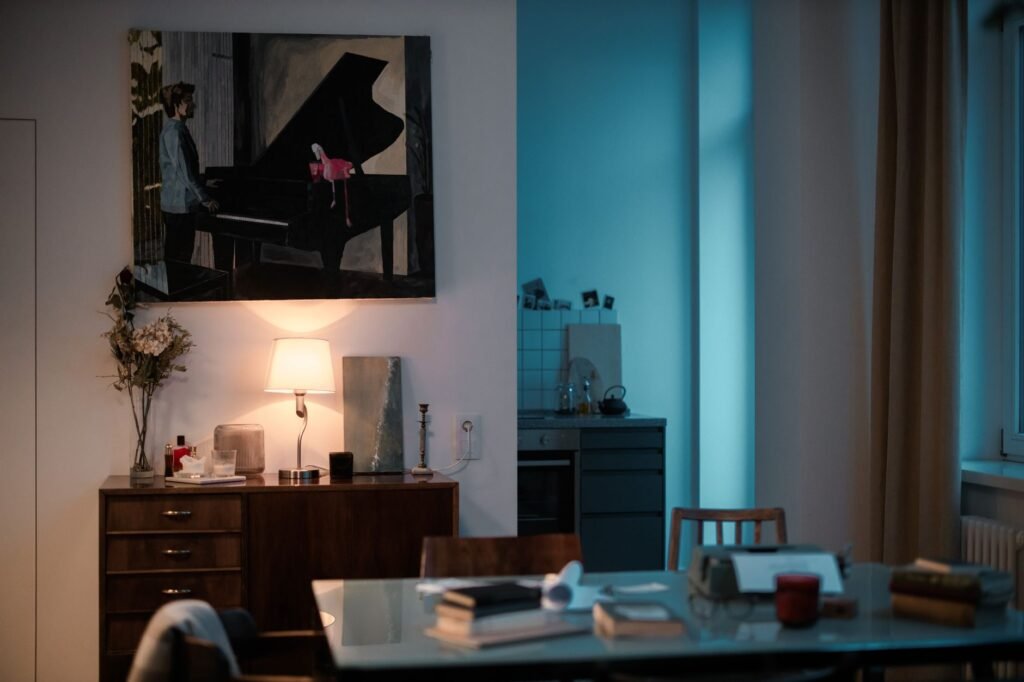
Three categories tend to outperform almost everything else: lighting, textiles, and food anchors. Lighting changes how a room feels faster than nearly any other budget move, and the Department of Energy says residential LEDs use at least 75% less energy and last up to 25 times longer than incandescent bulbs. Food anchors matter too. The BLS said average food-at-home spending was $6,224 and food-away-from-home spending was $3,945 in 2024, so one deliberately upgraded meal at home each week can change both atmosphere and spending. (energy.gov)
| Upgrade | Suggested cap | Why it works | Best fit | Skip if |
|---|---|---|---|---|
| Warm LED bulbs or one lamp change | Under $30 to start | Softer, layered light makes ordinary rooms look calmer and more finished | Living room, bedroom, kitchen counter | You still need brighter task lighting or cannot swap bulbs |
| Two better bath towels | Under $50 | High-touch comfort you notice every day | Primary bathroom | Laundry space is very limited |
| Better pillowcases or a sheet set | Under $100 | Sleep feels upgraded without buying décor that just sits there | People who truly decompress in bed | The real problem is an old pillow or bad mattress |
| One weekly grocery anchor upgrade | Under $15 per week | Good bread, butter, fruit, dessert, or sparkling water can make a plain dinner feel intentional | Households trying to replace one restaurant meal | Specialty food often goes to waste |
| Coffee or tea ritual at home | Under $25 per month after setup | Creates a café feeling at home and can replace pricier habits | Daily coffee or tea drinkers | You only buy coffee socially once in a while |
| Subscription cleanup to fund the above | Target $10 to $40 in savings | Cuts invisible spending so visible comforts fit the budget | Anyone with auto-renewals | You have not reviewed statements yet |
That last row is not glamorous, but it is often the funding source. The Federal Trade Commission advises consumers to look for clear cancellation terms before signing up, keep records of cancellation requests, and watch bank or card statements after canceling. That makes subscription cleanup less about deprivation and more about paying for the upgrades you actually use. (consumer.ftc.gov)
A $94 luxury reset for a normal month
In this composite example, a two-adult renter household wants evenings to feel less chaotic but can redirect only about $100 a month. A 60-day review finds a $12 app renewal nobody uses, a $14 wellness subscription that overlaps with free content they already get, and one weekly delivered lunch that costs about $17 more than an upgraded homemade version. Total cash freed: $94 a month.
In month one, they spend $24 on warm LED bulbs for the living room and bedroom, $34 on two better bath towels, and $36 on four small grocery upgrades for weeknight dinners: better pasta, real Parmesan, good bread, dessert ingredients, and sparkling water. Nothing about that budget says luxury on paper. In practice, it creates better light, a more pleasant post-shower routine, and one dinner a week that feels deliberate instead of automatic.
A one-week reset to build your own version
- Review the last 60 days of bank and card statements. Circle recurring charges and convenience purchases that did not clearly improve your week.
- Pick one room and one routine. Examples: bedroom plus winding down, or kitchen plus weekday lunch.
- List five possible upgrades and run the Daily Luxury Score on each one.
- Set a cap before you shop. Keep most of the money for durable, high-use items.
- Buy the smallest version first. Two better towels beat a full linen overhaul.
- Use the upgrade on weekdays, not only when guests come over.
- Put a 30-day review on the calendar. If you did not use it at least 12 times, it probably was not a true everyday luxury.
Try a 70/20/10 Luxury Split. Put about 70% of the budget into durable daily-use items, 20% into repeatable food or drink touches, and 10% into experiments. If an experiment disappoints, the loss stays small.
Common mistakes that quietly blow the budget
- Upgrading the whole category instead of the one pain point. If the bedroom feels rough, start with sheets or lighting, not a full room refresh.
- Confusing premium with daily. Expensive gadgets used monthly rarely beat simple items touched every day.
- Adding several small recurring charges at once. A $9 membership, $12 refill plan, and a $15 delivery perk become real money quickly.
- Buying aesthetic items that add work. If it needs special cleaning, assembly, or constant restocking, it should score lower on upkeep.
- Saving the best things for guests. Everyday luxury only works if the nicer mug, towel, plate, or lamp is part of normal life.
When the nicer towel is not the answer
Sometimes the right move is not to buy anything yet. If cash flow is tight because rent, utilities, insurance, minimum debt payments, or medical bills are already squeezing the month, treat this kind of spending as a later phase. The CFPB’s needs-versus-wants framework is basic but useful here: stabilize true obligations first, then choose one intentional want instead of a pile of accidental ones. (consumerfinance.gov)
- Deep-clean the most visible 20 square feet of one room.
- Move existing lamps so light lands at eye level instead of relying only on overhead lighting.
- Put tomorrow’s clothes, keys, and water bottle in one landing zone each night.
- Use the nicer dishes, mug, blanket, or tray you already own on weekdays.
- Plan one low-effort house-special meal that prevents expensive last-minute takeout.
- Borrow an ebook, audiobook, or movie instead of adding one more feel-good subscription.
How to pressure-test whether it actually worked
After 30 days, judge the upgrade like an editor, not a shopper. Did it reduce a more expensive habit, or did it just sit beside the old one? Did it make one part of the day easier on repeat? If the change involved any membership, free trial, refill plan, or auto-renewal, make sure the cancellation path is clear right away, keep confirmation records, and monitor statements afterward. The FTC specifically recommends that kind of follow-through. (consumer.ftc.gov)
- Keep it if you used it three or more times a week.
- Keep it if the cost per use is heading below $1 by month three.
- Keep it if it replaced another expense or reduced stress at a predictable time of day.
- Cut it if it created clutter, chores, or another monthly fee.
- Re-score it every season. What feels luxurious in winter may not matter in summer.
Bottom line
An emotional overhaul rather than an extravagant purchase is the best way to get yourself into the luxury world while living on a budget. The most luxurious life is achieved through a combination of day-to-day decisions that make your simple Tuesday Night into an easi…more refined way to experience life. By investing in things that have frequent interaction with you (not just once a year), you are able to spend less money overall. Saving money by eliminating hidden lebos is also another way to free up funds for your everyday costs. Finally, if an upgrade does not add long term value to your everyday living situation, it simply shows that it is only transient inventory.
FAQ
What should most people upgrade first if they want an instant difference?
You need to begin your room update with either a lighting fixture or a bed-and-bath accessory; both will change the room’s atmosphere and are used on an almost daily basis. If your room looks good overall but you tend to rush out each morning, spend your initial dollars on decreasing frictive force(s) – examples would be upgrading your coffee-making area (to something more streamlined than what currently exists) or creating a defined space where you can easily keep essential items when entering/leaving the home.
Is it smarter to buy one nice item or several small treats?
Most of the time, one durable wins out. One upgrade you use every day will generally beat a Ziploc bag full of novelties. Small treats are fine as long as it’s left clear that one replaces a habit that bumps up against the budget – a dinner at home you like better than takeout, for instance.
How much can I budget for this without derailing other goals?
Use a capped amount that does not interrupt bills, minimum debt payments, or planned saving. For many households, that means a modest fixed line item instead of an open-ended category. Even $25 to $50 can go a long way if it is aimed at high-use categories and reviewed regularly.
Are subscriptions ever worth it for a more luxurious life?
Sometimes, but only if you use them weekly and can explain in one sentence what problem they solve. One-time upgrades are often safer because they do not linger in the budget. If you do subscribe, know how to cancel on day one and check the next statement to confirm it worked. (consumer.ftc.gov)
Can affordable luxury actually save money?
It can, but usually only when it replaces a costlier habit. The Department of Energy says residential LEDs use far less energy than incandescent lighting, and better home coffee or dinner routines can reduce café or takeout spending if you genuinely stick with them. That is the key distinction: substitution may save money; duplication usually does not. (energy.gov)
References
- Bureau of Labor Statistics – Consumer Expenditures–2024 – https://www.bls.gov/news.release/cesan.nr0.htm
- Bureau of Labor Statistics – Consumer Price Index: 2024 in review – https://www.bls.gov/opub/ted/2025/consumer-price-index-2024-in-review.htm?hl=en-US
- Consumer Financial Protection Bureau – Budgeting for needs and wants – https://www.consumerfinance.gov/consumer-tools/educator-tools/youth-financial-education/teach/activities/budgeting-needs-wants/
- Department of Energy – LED Lighting – https://www.energy.gov/energysaver/led-lighting
- Federal Trade Commission – Getting In and Out of Free Trials, Auto-Renewals, and Negative Option Subscriptions – https://consumer.ftc.gov/articles/getting-and-out-free-trials-auto-renewals-and-negative-option-subscriptions